

For the past three weeks, I’ve been building something a little different from my usual research on AI and U.S.-China relations.
Today, I’m launching Chanceries: an illustrated guide to Washington’s embassies, and a history of the world’s diplomacy with the United States.
Chanceries is a technology platform that converts 2D public records into 3D space. AI agents turn thousands of photographs and municipal property records into interactive models of 60 embassies and ambassadorial residences across the DC area.
The website also hosts biographies of more than 2,000 ambassadors who have served in Washington, and searchable databases of major milestones in U.S. foreign relations.


Chanceries began with a national security research question: How much property do foreign governments own across the Washington, DC area?
Answering this required working through long-lost municipal records and scattered accounts of when governments bought or began using particular buildings.
As I began collecting that material, I also wanted to make it easier to explore the embassies, themselves. These are beautiful buildings—and they are an important part of what makes living in DC so special. Embassy architecture reflects both how governments choose to present themselves in Washington, and a history of the city itself.
In the Chanceries Embassy Collection, you can step inside illustrated reconstructions of embassies’ historic and ceremonial rooms. Take a stroll around Russia’s $500 million Glover Park compound, dine for an evening at the French ambassador’s residence, or grab a drink at the Hemingway-themed bar in the Cuban embassy’s basement.
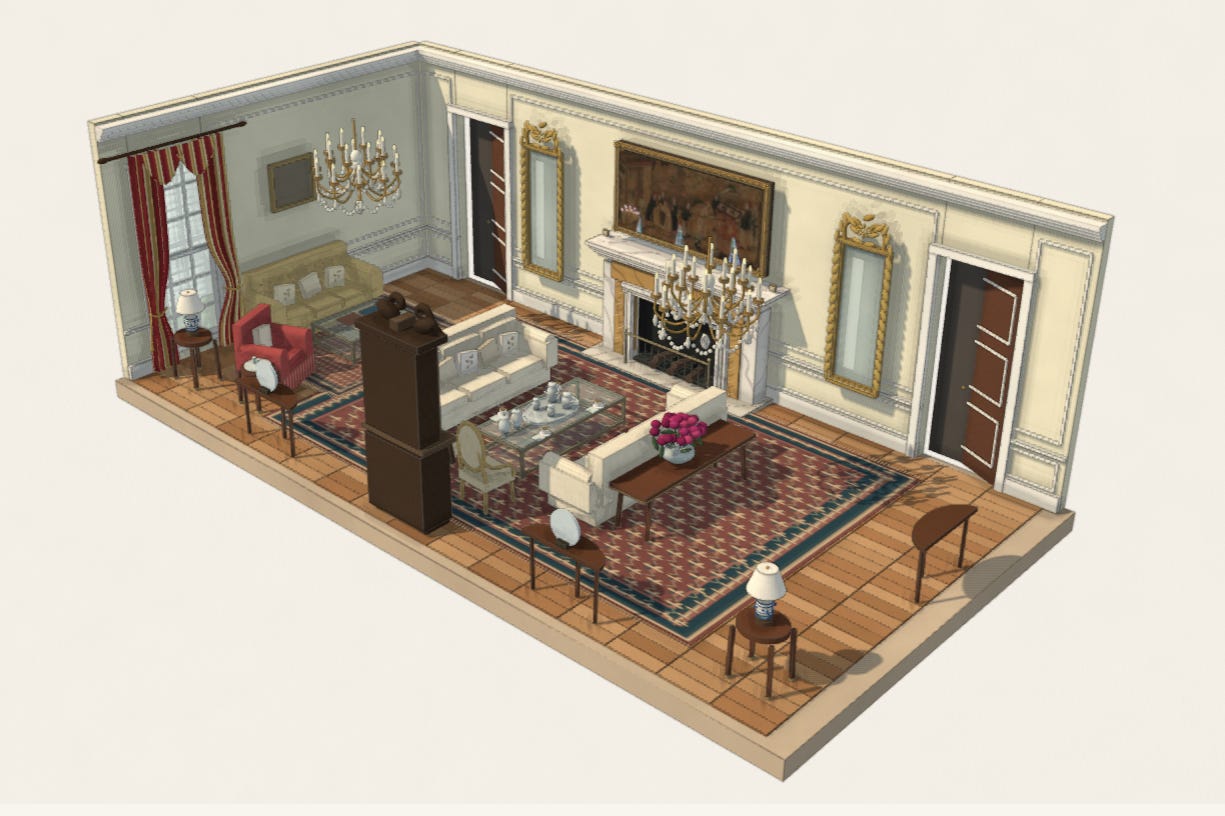
Ultimately, embassies are just one entry point into the history of U.S. foreign relations.
As part of Chanceries, I’m also launching Diplopedia, the diplomatic encyclopedia—not to be confused with the State Department’s internal wiki from 2006. Chanceries’ Diplopedia traces the lives and careers of 2,000+ foreign envoys sent to Washington since the founding of the United States.
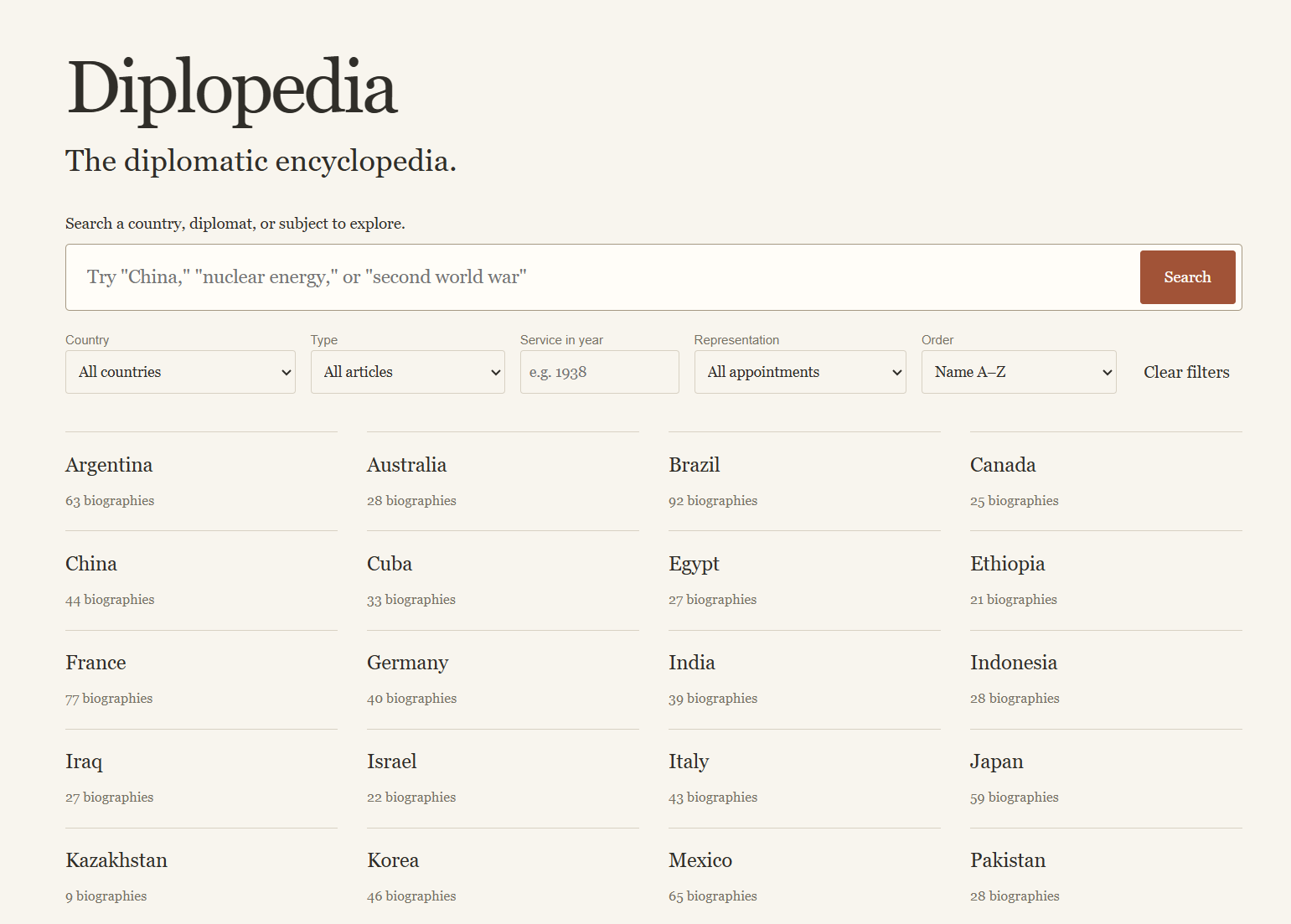
Diplopedia is compiled from primary-source records and archival research in multiple languages, with exportable citations and Wikipedia-style correction requests. You can search for a country, ambassador, topic, or event, and explore related people and primary source documents—often in much greater detail than what you will find on popular-history websites.
As one example, Diplopedia has ingested all 450+ volumes of the State Department’s Foreign Relations of the United States (FRUS). Chanceries strives to make this and other collections of historical records more accessible and responsive to search.
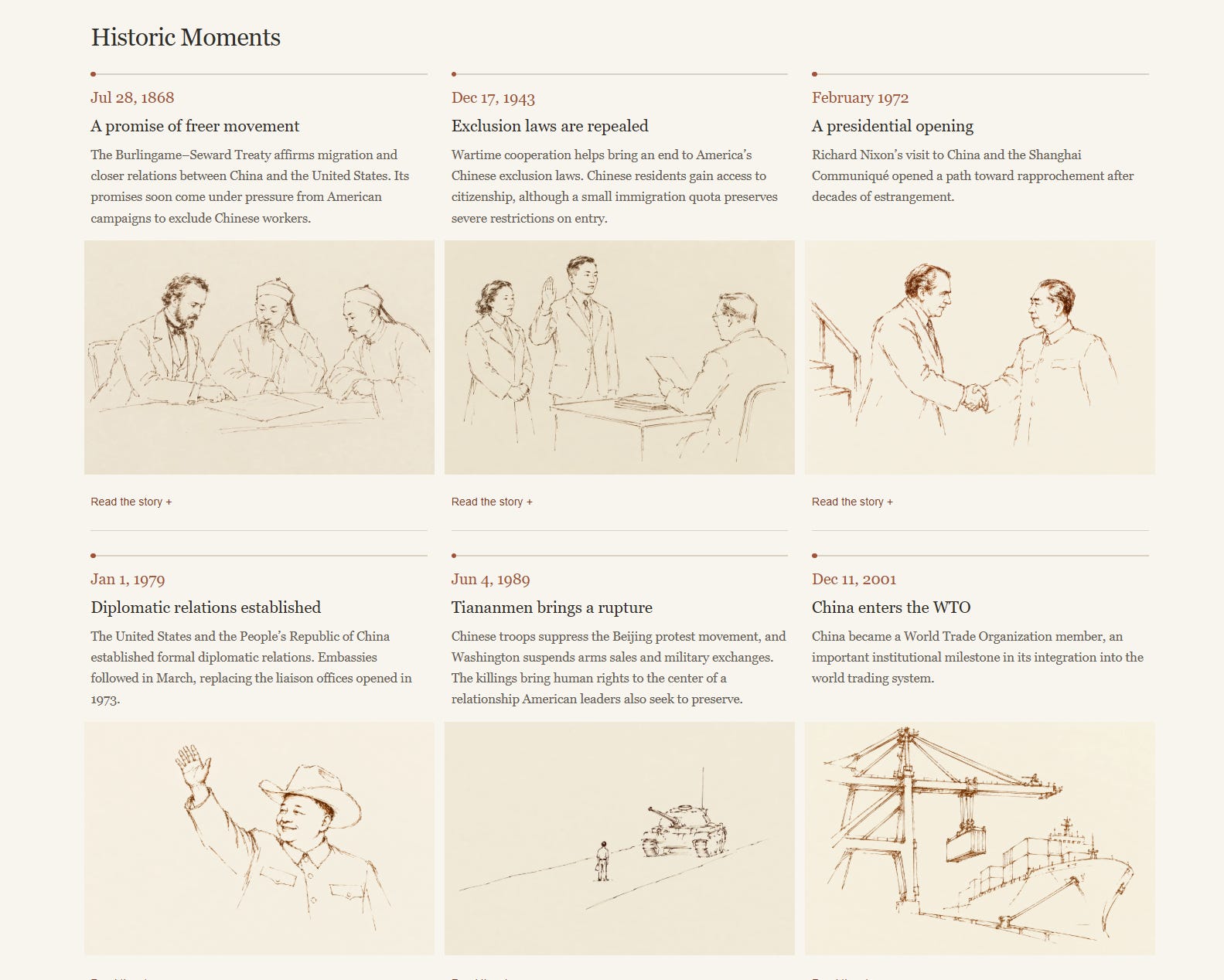
For readers who want to do their own research, Chanceries also includes three searchable databases:
The Diplomatic Properties Database compares buildings by architecture, size, acquisition date, and assessed value. So far, it covers 160 properties spanning 6 million square feet in floor area, with a combined value of $3 billion.
The Chiefs of Mission Database tracks ambassadorial appointments, accomplishments, and their years of service.
The Bilateral Relations Database charts major diplomatic milestones in each country’s relationship with the United States.
The databases automatically update as Chanceries continues to expand.
Researchers can download Chanceries data and export citations with one click. A custom Model Context Protocol (MCP) server also lets AI agents query the collection directly.
How Did You Build This?
Chanceries was built with OpenAI’s GPT-6 Astra.
To construct 3D building models and room studies, AI agents search thousands of District of Columbia municipal property records to establish physical building dimensions. They also collect publicly available street-level photographs, overhead satellite imagery, and interior photographs and videos captured on social media from public events.
Chanceries building models use an average of 40 reference photographs, though some can be completed with as few as six. More complete photographic coverage and property data can improve rendering quality. The illustration style draws inspiration from April Zhu’s Colorfigures.
To trace each mission’s history and diplomatic appointments, agents scour U.S. and foreign-government archives for primary-source documents.
Chanceries pushes the bounds of what individuals can do with frontier AI. V1 was planned and completed in 3 weeks with a single ChatGPT Pro subscription, consuming about 10 billion tokens (~$100,000-$500,000 in test-time compute at API pricing) in the process. Astra estimates this usage puts me in the top 0.0001% of its users—that is, somewhere in the top 1,000 ChatGPT users worldwide.

In practical terms, this has meant I’ve had about 4-5 GPT-6 Pro “Chat” sessions or Astra-Very High “Work” sessions running in parallel, 24/7. I prompt these by hand and frequently have to reconcile stalled or timed-out reasoning sessions. I do not use Codex.
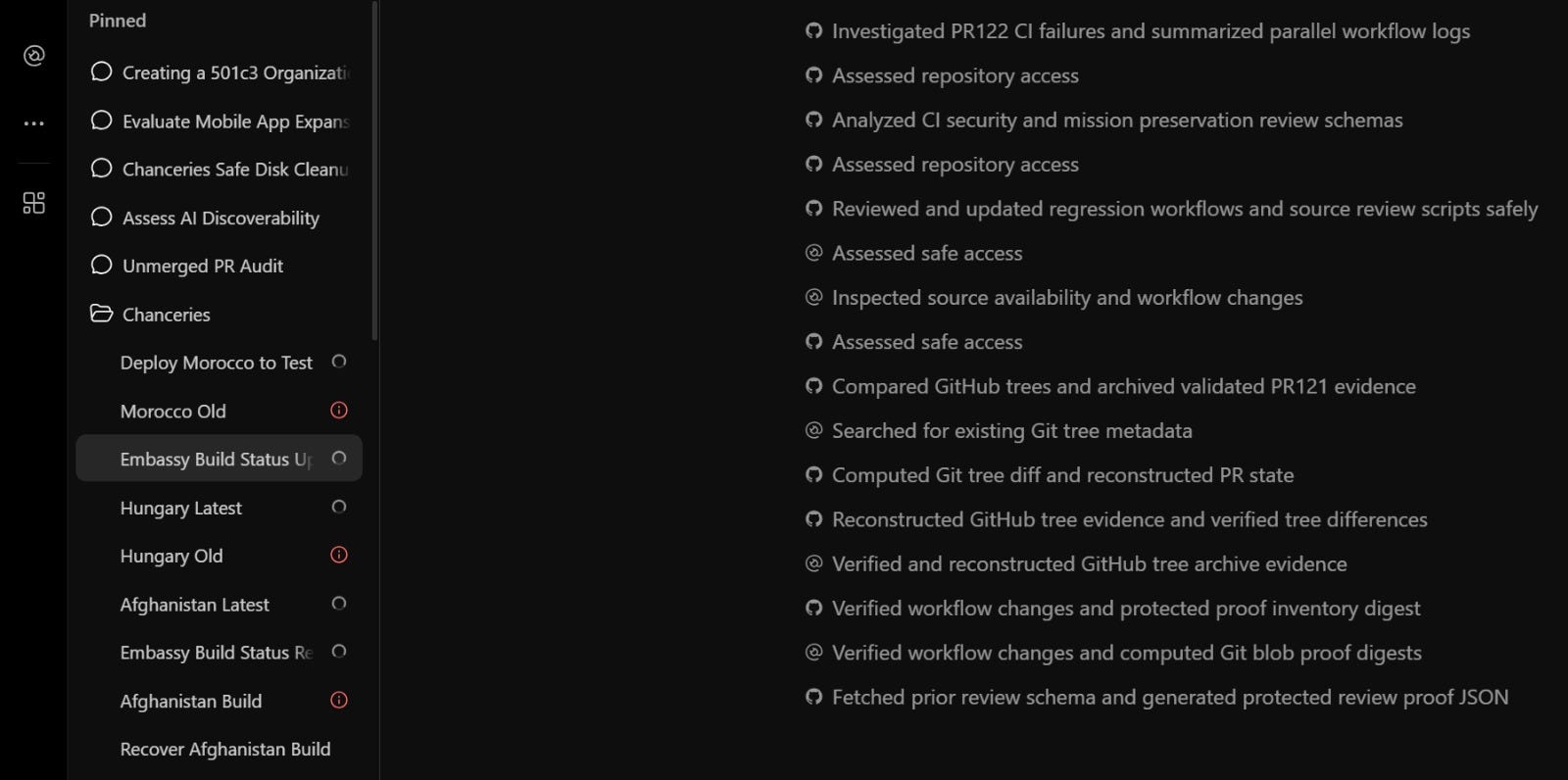
All research draws on publicly available sources. No privileged or non-public information is used in the production or maintenance of Chanceries.
Chanceries is an independent public benefit project. It is not affiliated with any foreign mission or the U.S. government.
Isn’t This Sensitive?
Washington’s embassies are part of the city’s architectural and diplomatic heritage. In opening that heritage to the wider public, we have a responsibility to respect the privacy and security of the people who live and work in them.
Chanceries focuses on building exteriors and publicly-documented historic or ceremonial rooms. Many embassies already share these spaces through virtual tours and Passport DC open house events. The project does not identify security systems, communications infrastructure, or private living arrangements. Interested parties are welcome to submit specific concerns to corrections@chanceries.org.
As an AI policy researcher, part of my motivation for building Chanceries is to make the implications of AI’s growing capabilities more concrete for governments. Anyone with a Claude or ChatGPT subscription can now combine property records, photographs, and other scattered public information into spatial reconstructions. World models specifically designed for this purpose are hitting app stores this fall.
The fact that information is publicly available does not automatically settle whether, or how, it should be assembled and published.
Chanceries illustrates AI’s potential for public education and cultural diplomacy, with deliberate limits in place to protect foreign missions’ privacy and security. It also highlights an urgent challenge for governments and AI developers: how to develop appropriate safeguards as increasingly capable AI tools make it easier to reconstruct physical environments from publicly available information.
What Comes Next?
In this weekly Chanceries newsletter, I’ll be sharing new buildings, stories from the archives, and reflections on building a digital public good. You can also expect greater embassy coverage and gradual expansions in Diplopedia. (We’re also working on a mobile app to give DC residents a new way to experience Embassy Row.)
Chanceries is free to the public—and just one of several projects I’ve been building with AI in addition to writing about it.
If you’re interested in supporting the project’s operating costs, consider becoming a paid subscriber.
Thanks,
Ryan Fedasiuk
Founder and Chief Architect, Chanceries